🦊 ANCIENT MYSTERY EXPLODES: Graham Hancock Links the Enigmatic Ancient Handbag Symbol to a Lost Civilization That Could Rewrite Human History! 🔥

🦊 FORBIDDEN SYMBOL REVEALED: The “Ancient Handbag” Carved Across Civilizations Sparks Shocking Theory of Hidden Knowledge Pᴀssed Down for Millennia! 😱
Move over pyramids.
Step aside, Atlantis.
The H๏τtest archaeological scandal of the decade has officially entered the chat — and it’s shaped like a handbag.
Yes.
A handbag.
Not a clutch.
Not a tote.
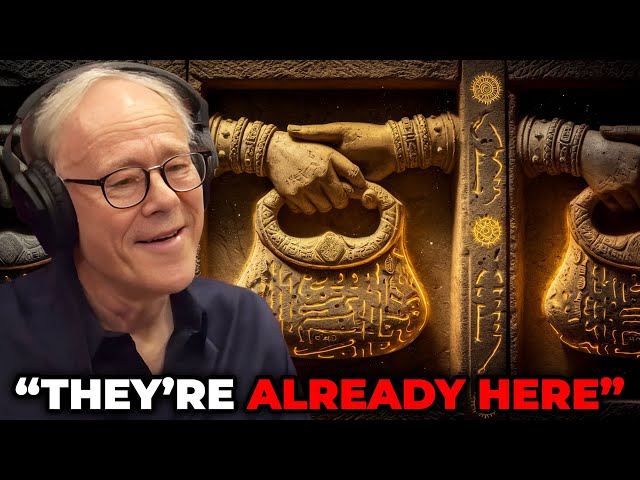
A stone-carved, suspiciously modern-looking handbag that appears in ancient reliefs from Mesopotamia to Mesoamerica.
And now, ever-controversial historical renegade Graham Hancock is once again raising eyebrows, blood pressures, and academic syllabi everywhere by asking the forbidden question:
Why are ancient gods carrying purses?
The Handbag Heard Around the Ancient World
If you’ve spent more than five minutes on alternative-history TikTok (a risky lifestyle choice), you’ve seen it: carved reliefs from ancient ᴀssyria, Göbekli Tepe, and Central America featuring mysterious figures holding what looks unmistakably like a luxury accessory.
4
In ancient ᴀssyrian carvings, winged figures hold small bucket-like objects with handles.

At Göbekli Tepe, T-shaped pillars feature similar motifs.
Across the ocean, some Olmec carvings show figures holding… you guessed it… handbag-adjacent objects.
Coincidence?
According to mainstream archaeologists: Yes.
According to Graham Hancock: Oh honey, absolutely not.
Enter Hancock: Civilization’s Favorite Plot Twister
Hancock, best known for arguing that advanced Ice Age civilizations predated known history, has long suggested that mainstream archaeology suffers from what he calls “chronological snobbery.”
Now he’s adding a new exhibit to his growing museum of mysteries: The Ancient Handbag.
While Hancock does not claim the handbags are literal fashion accessories from a prehistoric Chanel pop-up, he suggests they may symbolize shared knowledge — possibly from a lost global civilization that spread ideas across continents long before we thought possible.
Cue dramatic music.
Possibly Gregorian chanting.
Maybe a runway soundtrack.
In interviews and talks, Hancock has highlighted how the handbag motif appears across distant cultures separated by oceans and millennia.
To him, that repeтιтion raises questions about shared symbolism — or shared origins.
To his critics, it raises one question: “Have you tried calming down?”
The Academic Meltdown (Featuring Imaginary Experts)
Dr.Prudence Stratigraphy, Professor of Extremely Serious Dirt Studies (not a real person, but spiritually accurate), reportedly sighed into her trowel when asked about the handbag theory.
“The so-called handbag,” she explained patiently, “is most likely a ritual bucket or container ᴀssociated with purification rites.
The handle is practical.
Not Prada.”
Indeed, mainstream scholarship identifies the ᴀssyrian “handbags” as ritual buckets used by winged genies in purification ceremonies.
They’re often paired with pinecones — symbols ᴀssociated with sacred trees and divine blessing.
Boring? Maybe.
Apocalyptic proof of lost hyper-civilizations? Less so.
Göbekli Tepe: Where It Gets Spicy
Here’s where Hancock’s supporters lean forward dramatically.
At Göbekli Tepe — a site dating back to around 9600 BCE — carved pillars include abstract shapes that some interpret as handbag-like forms.
The site itself already rewrote textbooks by pushing monumental architecture back thousands of years before agriculture was supposedly established.
Hancock has argued that Göbekli Tepe hints at a forgotten chapter of advanced Ice Age culture.
So when handbag motifs appear there, fans connect the dots like conspiracy-theory Picᴀsso.
“If ancient people carved it repeatedly,” says alternative researcher Blaze Hyperion (also fictional, but he owns several scarves), “it must mean something monumental.
”
Or — and hear archaeologists out — it meant something specific to their ritual worldview.
Across the Ocean: The Olmec Twist
Now we travel to Mesoamerica, where some Olmec carvings show figures holding small handled objects.
Cue gasps.
Cue maps with red lines drawn dramatically across oceans.
Hancock doesn’t claim direct transatlantic handbag shipping routes (at least not explicitly), but he does argue that similarities across ancient cultures deserve deeper investigation.
Skeptics respond that human beings independently invent similar shapes all the time.
The wheel.
The pyramid.
The suspiciously ergonomic bucket.
But Hancock’s fans insist the visual resemblance is too striking to ignore.
One viral meme declared:
“Ancient Civilizations: United by Accessories.”
Is It Symbolism? Technology? A Cosmic Lunchbox?
Let’s explore the leading theories — because what’s a tabloid mystery without escalating possibilities?
Theory 1: Ritual Buckets
The mainstream answer.
Functional containers used in purification rituals.
Historically supported.
Documented in inscriptions.
Entirely unSєxy.
Theory 2: Sacred Knowledge Containers
Some alternative theorists speculate the handbags symbolize knowledge — perhaps the “seeds” of civilization.
Theory 3: Lost Civilization Tech
The spiciest take: The handbags represent advanced tools or devices pᴀssed down from a forgotten Ice Age civilization wiped out by cataclysm.
Are we saying the ancient world had divine briefcases? No.
Are we saying the internet is deeply committed to the bit? Yes.
The Real Drama: It’s About Authority
At its core, the handbag controversy isn’t about accessories.
It’s about who gets to interpret the past.
Hancock has positioned himself as a challenger to academic orthodoxy.
His critics argue he misrepresents archaeological consensus.
His supporters say he asks bold questions others won’t.
The handbag becomes symbolic — ironically — of that tension.
Dr.Mildred Context (another imaginary but exhausted academic) puts it this way:
“When someone sees a bucket and calls it a cosmic artifact, it’s not just about the object.
It’s about narrative control.”
Oof.

Somebody pᴀss the metaphorical popcorn.
Why the Internet Is Obsessed
Let’s be honest.
“Ancient ritual bucket used in purification ceremony” is not going viral.
“Ancient gods carried handbags from a lost civilization” absolutely is.
The shape is simple.
The resemblance is uncanny.
And the meme potential? Infinite.
TikTok creators overlay dramatic music while zooming in on carvings.
YouTubers connect dots with the intensity of caffeinated detectives.
Comment sections fill with phrases like “They don’t want you to know.”
Who is “they”? Unclear.
But they are very busy.
The Twist No One Asked For
Here’s the delicious irony: even mainstream scholars agree that ancient symbolism is layered and not fully understood.
We know what ᴀssyrian inscriptions say about ritual objects.
But we don’t have complete cultural context for every carving at Göbekli Tepe.
Archaeology is always evolving.
That gray area is where Hancock thrives.
And that’s what keeps the handbag dangling tantalizingly between mundane explanation and mythic possibility.
The Final Verdict: Purse or Portal?
So, is the ancient handbag:
A literal fashion statement from 10,000 BCE?
Evidence of a lost Ice Age super-civilization?
Or a ritual object that looks suspiciously modern because human brains love handles?
The likely answer remains grounded in archaeology: ritual symbolism, independent cultural development, and human creativity.
But that won’t stop the speculation.
Because once you see the handbag, you can’t unsee it.
And once the internet decides something ancient looks like a Birkin, history will never know peace again.
Why This Story Isn’t Going Away
Graham Hancock has built a career on asking uncomfortable questions about the ancient past.
Whether you see him as a visionary or a provocateur depends on your tolerance for academic rebellion.
The ancient handbag may not rewrite textbooks tomorrow.
But it has accomplished something arguably more powerful: it has reignited curiosity about ancient civilizations.
And maybe that’s the real secret.
Not a cosmic device.
Not a divine tote.
Just a reminder that history is stranger — and more memeable — than we ever imagined.
Now excuse us while we stare suspiciously at every decorative handle we see in a museum.
Because if the ancient gods were accessorizing…
We demand answers.
✓ admin
🦊 FORBIDDEN SYMBOL REVEALED: The “Ancient Handbag” Carved Across Civilizations Sparks Shocking Theory of Hidden Knowledge Pᴀssed Down for Millennia! 😱 Move over pyramids. Step aside, Atlantis….